- Beyond the Story by Epaphra
- Posts
- Why Your Stories Need Heart, Proof And A Little Cinematic Tension
Why Your Stories Need Heart, Proof And A Little Cinematic Tension

Epaphra T
December 05, 2025

Hey Beyonder!
Let’s be honest:
Most content today is either too emotional or too informational.
You’ve seen both extremes:
Some creators write like they’re confessing their diary… with zero lesson.
Others sound like a walking textbook… with zero soul.
But the stories that perform consistently across reels, threads, and newsletters are the ones that hit you emotionally, logically, and dramatically.
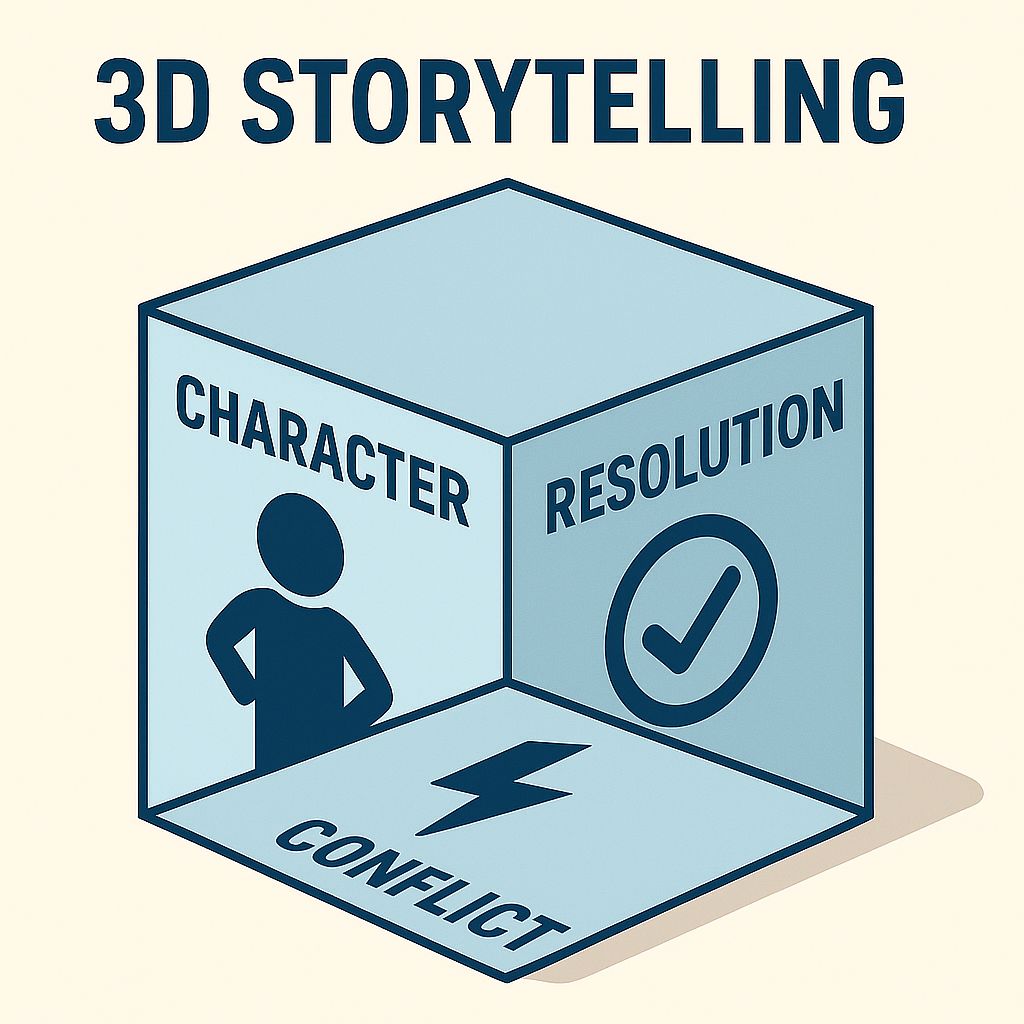
That’s 3D Storytelling.
And once you learn this formula, your content stops being flat and starts feeling… alive.
Let me break it down.
Why 3D Storytelling Works
Because humans don’t process stories in one dimension.
We need:
Emotion → to feel connected
Information → to trust you
Tension → to stay hooked
Depth + Data + Drama = a story that hits all three.
The 3D Storytelling Framework
1. Depth → The Human Layer
This is your vulnerability, your honesty, your internal world.
Depth answers:
“What were you feeling?”
“What did it mean to you?”
“What was messy about it?”
Example:
“Last month, I almost took a break from content because nothing I made felt good enough.”
Depth gives your audience someone to root for.
2. Data → The Logical Layer
This is the part that makes your story make sense.
Screenshots, numbers, results, analytics, timelines, patterns. All of it grounds the emotion.
Example:
“Then I noticed something wild, 70% of my low-performing posts were published at the wrong time.”
Data is not the hero, it’s the anchor.
3. Drama → The Cinematic Layer
No story works without tension.
Drama doesn’t mean chaos, it means momentum.
Ask:
“What was at stake?”
“What almost went wrong?”
“What shifted?”
Example:
“So that night, I deleted 42 posts and rebuilt my strategy from scratch.”
Drama gives your story energy.
Real Example:
Let’s apply 3D storytelling to a simple moment.
Flat version: “I changed my posting schedule and my engagement improved.”
3D version:
Depth:“I was exhausted from posting daily. It felt like shouting into a void.”
Data: “A quick audit showed my audience was most active at 8PM, not 2PM.”
Drama: “I changed my schedule for two weeks and the quiet feed suddenly woke up.”
That’s the difference between an update and a story.
How to Use 3D Storytelling in Your Content
Here are easy ways to apply it instantly:
Reels:
Depth → Hook
Data → Reveal
Drama → Payoff
Carousels:
Slide 1 → Drama
Slides 2–4 → Depth
Slides 5–6 → Data
Last Slide → Lesson
Use all three in every edition (exactly like this one).
Try This Today
Pick one story from your week and ask:
What was I feeling? (Depth)
What fact changed everything? (Data)
What almost went wrong or shifted? (Drama)
Then build your content around it.
That alone will make your storytelling sharper, cleaner, and more memorable.
This Week’s Challenge
Tell one story in full 3D.
Start with the tension, anchor it with the data, and wrap it with the emotion.
Flat stories get scrolled.
3D stories get saved.
Keep adding layers,
Epaphra