- Beyond the Story by Epaphra
- Posts
- Why Duolingo's Owl Threatens You (And You Love It)
Why Duolingo's Owl Threatens You (And You Love It)

Epaphra T
November 28, 2025

Hey Beyonder!
You've seen it.
The green owl. The unhinged comments. The threats about missing your Spanish lesson.
Duolingo is everywhere. On every trend. Using every viral audio.
And somehow, it never feels forced.
Most brands chasing trends look desperate. Duolingo looks dangerous.
What's the difference?
They're not just hopping on trends. They're filtering every trend through a story.
And that changes everything.
The Problem With Trend-Chasing
Here's what most creators do with trends.
They see a viral audio. They use it. They hope it works.
No context. No character. No connection to what they actually do.
It gets views for a day. Then it's forgotten.
Because trends give you reach. But they don't give you retention.
People remember stories, not templates.
So when you use a trend without a story, you're just noise in a feed full of the same audio.
Trends vs. Trend Fusion
There's a huge difference between using trends and fusing them.
Using a trend: You copy the format exactly as is.
Fusing a trend: You run it through your story's lens.
Duolingo doesn't just use trending audio.
They use it to tell the ongoing story of an owl who's low-key psychotic about making you learn languages.
Same trend. Different narrative layer.
That's why you remember Duolingo's version and forget everyone else's.

How Duolingo Owns Every Trend
Duolingo's social media is chaos. But it's controlled chaos.
Every post, no matter the trend, tells the same story: The owl is your sassy, slightly threatening accountability partner.
Trending audio about missing someone? Duolingo owl misses you. Ominously.
Trending meme about being unhinged? The owl is already there.
Dance challenge? The owl does it. With dead eyes.
They don't abandon their character to chase relevance. They use relevance to amplify their character.
And that's the framework.
The Filter Question
Before you use any trend, ask one question:
"What story from my world fits this tone?"
Not "Can I use this trend?"
But "How does this trend sound in my voice?"
Duolingo doesn't ask "Should we use this audio?"
They ask "How would the owl use this audio?"
That filter keeps them on brand while staying on trend.
Trend Fusion in Action
Let's break down how this works.
Step 1: Identify the trend's core emotion
Is it chaotic? Wholesome? Dramatic? Relatable?
Don't just see the format. Feel the vibe.
Step 2: Match it to your story
What part of your brand, your journey, or your message carries that same emotion?
If the trend is about being unhinged, what's your "unhinged" moment? Your 2 am overthinking? Your obsessive editing process?
Step 3: Tell your version
Use the trend format. But make the content yours.
Duolingo uses trending sounds. But the story is always about language learning guilt and the owl's personality.
That's fusion. Not copying.

Why This Works (And Template-Chasing Doesn't)
Trends are vehicles. Not destinations.
When you just copy a trend, you're renting attention for 24 hours.
When you fuse a trend with your story, you're building a character people follow.
Duolingo's followers don't just watch for the trends. They watch for the owl.
The trends bring them in. The story keeps them there.
That's the difference between viral and valuable.
What I've Learned About Riding Trends
I used to avoid trends. Thought they were shallow.
Then I realized trends aren't the problem. Trendhopping without story is.
Now when I see a trending audio or format, I ask: "How does this fit my narrative?"
If I'm talking about building in public, I look for trends about struggle, growth, or messy journeys.
If I'm talking about storytelling, I look for trends about transformation or perspective.
The trend gets me seen. My story gets me remembered.
The Three-Layer Framework
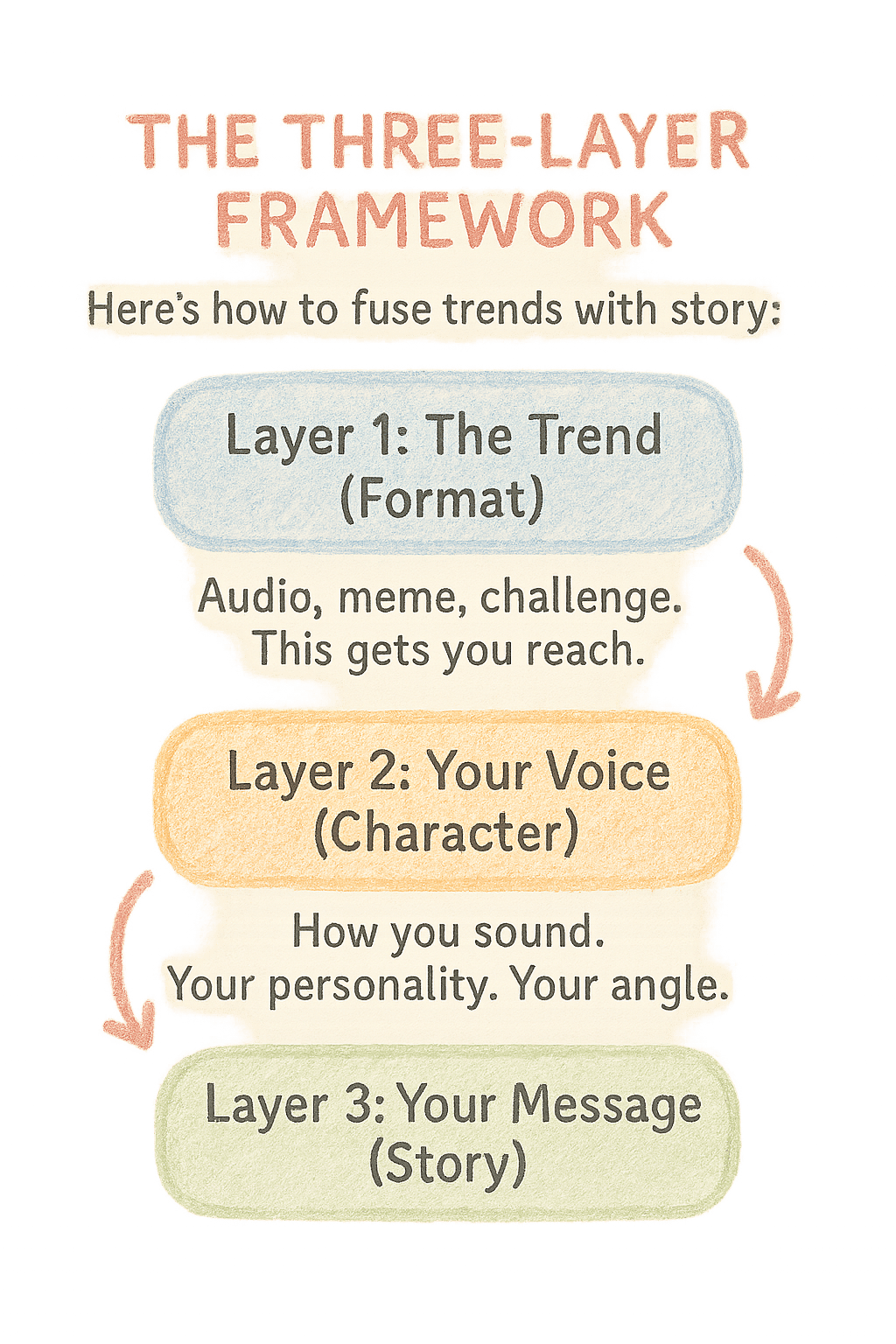
Duolingo nails all three:
Trend: Viral audio
Voice: Chaotic, threatening owl
Message: Learning accountability
Most creators stop at Layer 1. That's why they're forgettable.
Try This This Week
Pick a trending audio or format right now.
Don't just use it. Filter it.
Ask:
What's the emotion behind this trend?
What story in my world matches that emotion?
How do I tell my version using this format?
Then make it. But make it yours.
People will come for the trend. They'll stay for you.
The Real Lesson
Duolingo could've played it safe. Serious language app. Educational content. Corporate tone.
Instead, they created a character. An unhinged owl. A story about guilt and learning.
And now they dominate every trend without losing themselves.
Because they're not chasing trends. They're absorbing them into their world.
That's the move. Not trend-hopping. Trend fusion.
Ride the wave. But steer your own board.
Keep fusing,
Epaphra
P.S. Next time you see a viral trend, don't ask "Should I do this?" Ask "How would my story do this?" That question changes everything.